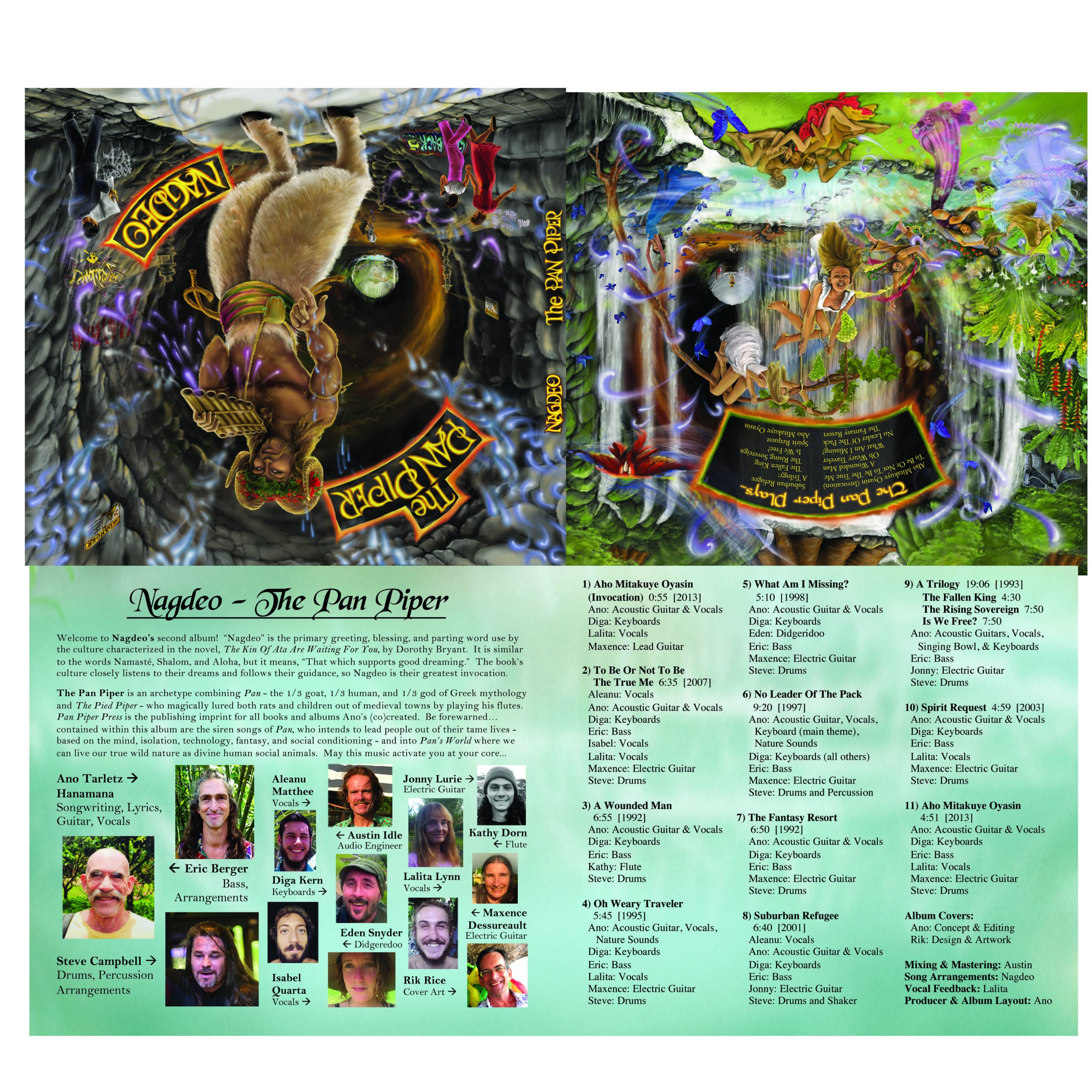
The Pan Piper

$12.00

Categories: ,

Published in 2018

“We will be remastering the entire album, The Pan Piper, and remixing three songs with new vocals and trumpet in early 2022.” So people might hold off on buying them until I’m happier with how they sound.” to “This is the original version of The Pan Piper, before it was remastered and had three songs updated with new female vocals and two of those songs also updated with trumpet. If you buy the CD, which is now a collector’s item, you can also get the new versions sent to you at no additional cost, digitally, if you request it.”

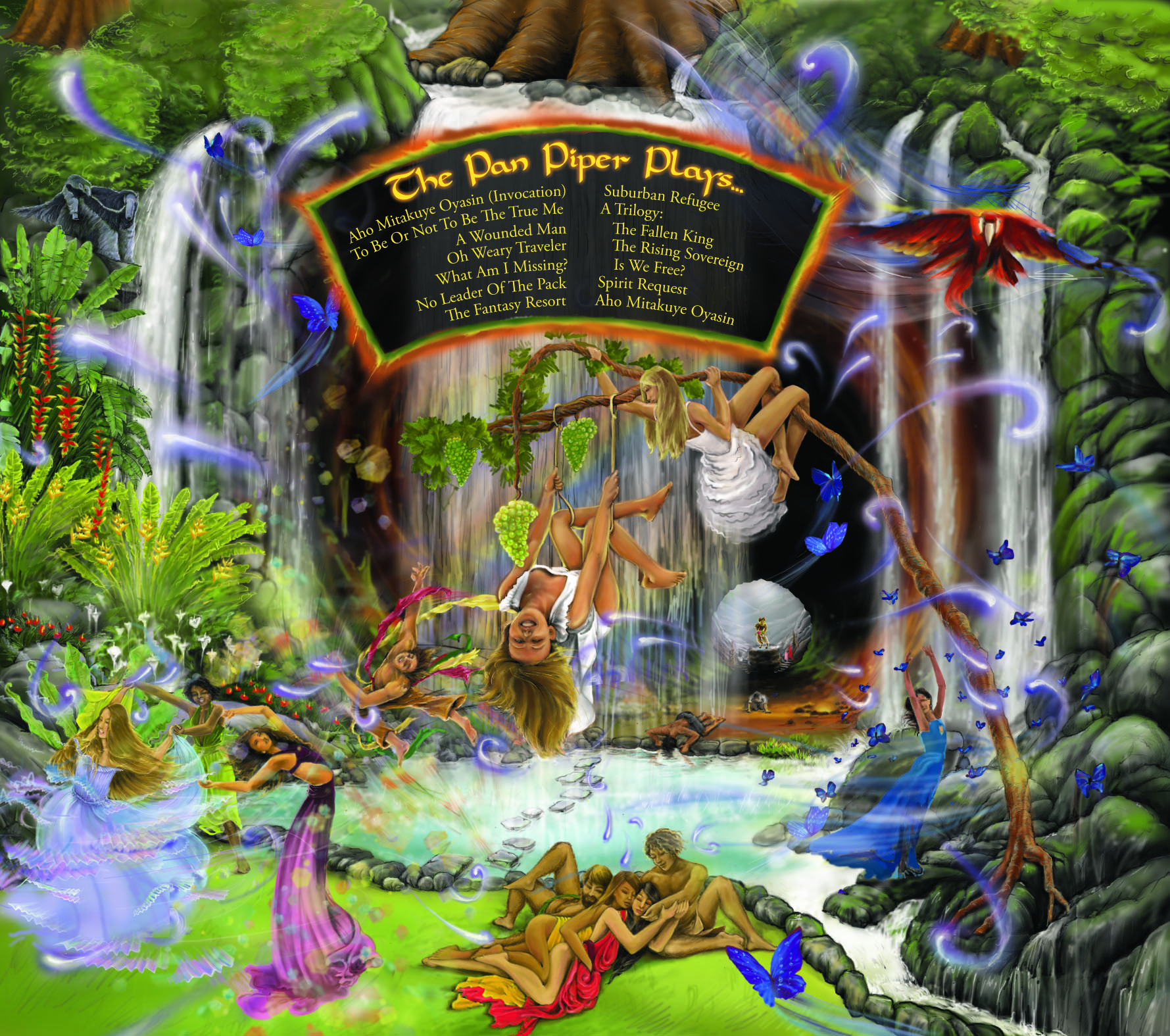
Collection of 11 songs

  1. Aho Mitakuye Oyasin (Invocation)
  2. To Be Or Not To Be The True Me
  3. A Wounded Man
  4. Oh Weary Traveler
  5. What Am I Missing?
  6. No Leader Of The Pack
  7. The Fantasy Resort
  8. Suburban Refugee
  9. A Trilogy
  10. Spirit Request
  11. Aho Mitakuye Oyasin

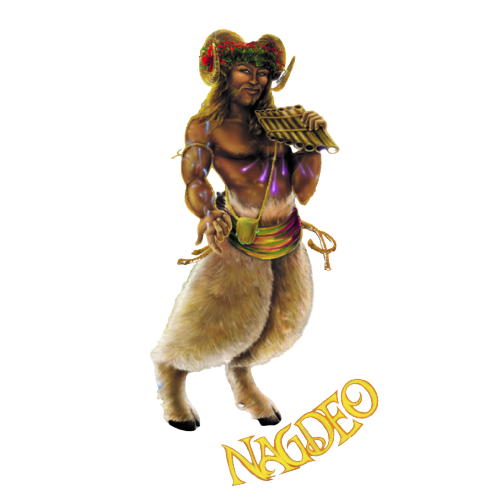
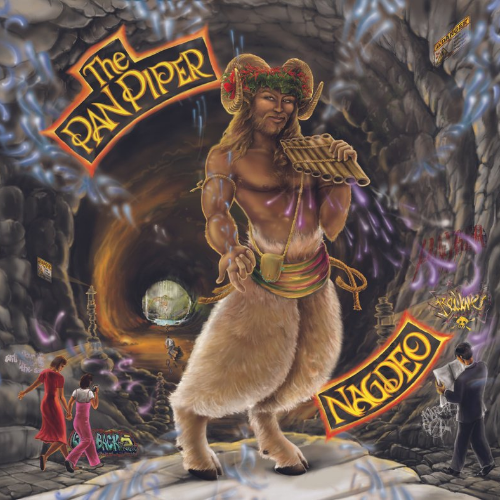
Pan Piper Press is the name of the publishing imprint that produces all of Ano’s books and music. The Pan Piper is an archetype that combines The Greek nature god, Pan, and the medieval mythical character, The Pied Piper.

Pan, who was the primary force in Tom Robbin’s novel, Jitterbug Perfume, represents what is wild, animalistic, free, and deeply grounded in nature. He is 1/3 goat, 1/3 man, and 1/3 god. His domain is outside of civilization, outside of reason, outside of our normal sense of morality. He lives from his own sovereignty and freedom, but with unshakeable integrity with the untamed, true, and soulful reality that underlies normal life.

The Pied Piper was a magical being who was hired by a town to play his flute and draw all the rats out of the city. He did his job, but then the city refused to pay him, so to teach them a lesson, he played his flute and drew all of the children away from their families and the city and brought them into the wilderness.

So The Pan Piper is combining these two archetypes into a single being whose purpose is to play songs that draw humans out of their civilized trance and back into their true nature as wild, free, natural, sensual, animalistic, divine beings.

This album is fundamentally a sacred and passionate journey out of our civilized conditioning and into our wildness. The songs on The Pan Piper, on the whole, are more complex compositions than the first album, and this album, though ultimately uplifting, is a dying out of numbness and complacency and into the depths of pain, fear, grief, rage, and confusion, to emerge reborn Pan’s world – much more connected to our true nature. Not for the faint of heart!
2 reviews for The Pan Piper

  1. Prof. Glenn Davis, Napa, CA

    The Pan Piper, the second release by “progressive Shamanic Folk-Rock” band Nagdeo, pulses with a low-key but steady energy. Driven by competent musicianship, a series of beguiling hooks, and arrangements in the tradition of 1970s folk-prog pioneers like Pentangle, It’s a Beautiful Day, and Wishbone Ash, it feels at once free-flowing yet highly structured. Like the mythical creature Pan who lured travelers into the wood, the mission of The Pan Piper, and Nagdeo generally, is to beseech listeners to enter the wild and leave behind the stifling dystopia of contemporary society, or in Nagdeo’s own words, “to inspire people to live their fullest humanity in community and nature.”
    If you weren’t already convinced you need liberating, or weren’t already seeking inspiration to live your fullest humanity, The Pan Piper may feel a little preachy at times. After beginning with Aho Mitakuye Oyasin, a soulful invocation built around a traditional Lakota phrase, the album settles into a series of three enjoyable if pedestrian numbers that nonetheless succeed on the solid vocals and interesting compositions of Nagdeo’s leader and driving spirit, Ano Hanamana. Characterized by predictable song structures and peppered with questionable insights, I found this the least compelling stretch of songs on the album compared to the remaining tracks.
    The Pan Piper really starts to get interesting with What Am I Missing?, which opens with the low moan of a didgeridoo followed by what sounds like vibraphones interlaced with acoustic guitar. Against this misty, lush sounding landscape, Hanamana skillfully counterposes exclamatory falsetto against his low tenor, musing on an unrequited longing, sobbing as he misses “a place he’s never been,” “a dream he’s never dreamt,” wailing and hurting because he can’t remember but he can’t forget, a time and place he’s never been.
    What Am I Missing? is a highlight of The Pan Piper. It works better than the opening numbers in the main because of its less predictable composition, and in part because its lyrics don’t suggest a pat answer to the discontentment portrayed. Having evolved on the savannas of Africa, humans are especially well adapted to an environment in which many of us no longer live. As a result we may not be especially well suited to the challenges of a post-modern life whose aggravations are often poorly served by the adrenaline rush and accompanying stress hormones that enabled our ancestors to survive a bygone circumstance. What Am I Missing? works because Hanamana remains unsettled, exploring but not resolving how it feels to own a brain and body mal-adapted in important ways to their present circumstance.
    No Leader of the Pack employs the metaphor of a “pack of coyotes wild-eyed on peyote” to further explore the liberating potential of transgressing societal norms, referencing along the way archetypes of disruption like the goddesses Kali and Pele. Nagdeo drummer Steve Campbell embellishes expectations for the galloping beat of a coyote pack with distinctive, jazz fusion type flourishes that propel this acoustic arrangement in a rock direction. The lyrics are metaphorical and highly evocative, featuring another caterwauling vocal break from Hanamana as well as haunting howls of real coyotes and wolves. Nagdeo’s home on the big island of Hawaii lies in the eruption zone of Kilauea volcano and even though Hanamana wrote the lyric elsewhere and many years earlier, it isn’t hard to imagine that living under the persistent threat of inundation could have inspired a line like “…down from saged hills / Blood and spines a chill /…Grace can seem evil / All defense amounts to nil”.
    A super-dank, super-funky line contributed by keyboardist Diga Kern, coupled with Hanamana’s self-consciously paranoid lyric, make The Fantasy Resort one of the most distinctive and instantly memorable tracks on the Pan Piper. Whereas some of the earlier tracks seemed to imply an easy antidote to dissatisfaction with mainstream society, the Fantasy Resort explores the doubts that can remain, frankly stating “You and me / Yeah, we’re the ones / Fakin’ that we’re free / Like loaded bums” after first admitting that “I can smell my stink.” Hanamana is a dissatisfied spirit in this song, trapped in a worldly body that smells, beset by a sense of self that can’t easily be escaped, seeking refuge from his capacity for self-deception. It is a powerful funk expressed in music and lyrics that nonetheless point to a respite, in the company of others, from overly self-conscious reflection, “…don’t you leave I need you near/ My emptiness is why you’re dear.”
    Chafing once more against mainstream social constraints, the autobiographical Suburban Refugee, “Muted and molded from infancy, in a fragmented family, without wise community, tricked by a paved reality,” reprises the themes of the songs that opened The Pan Piper with entreaties like “Suburban refugee heroically leave your security.” This tune is ultimately saved by a harrowing vocal attack on the chorus and a faintly syncopated, contrapuntal lead guitar break – reminiscent of a foreshortened Phish jam – that starts out clean but resolves into the most overtly rock-and-roll tone on the album.
    A tripartite suite follows, built on a lovely, self-resolving motif stated first on keyboard after the second verse of The Fallen King. Metaphorically treating the by now familiar themes of liberation, a nonetheless autobiographical tale of Hanamana’s life journey unfolds across this nearly twenty minute journey. Featuring a reprisal of both the rock-and-roll guitar tone of Suburban Refugee and the funky wah wah of The Fantasy Resort, along with Hanamana’s cathartic cries, grunts and sobs, A Trilogy doesn’t break much new ground but instead consolidates the strengths of the earlier tracks without reprising their pitfalls. For prog fans this may be the most satisfying track on the album and its sprawling arrangement merits repeated listening to absorb its many charms. Another standout track that resolves into a genuine ear-worm of a guitar hook on Is We Free?, Hanamana’s song writing skill is on full display here. Beautiful!
    The lovely invocations of Spirit Re-Quest and Aho Mitakuye Oyasin comprise a satisfying denouement to the Pan Piper. Each features an acoustic arrangement and its own gentle, pleasantly lilting melody.
    The Pan Piper is out of step with its time both in its structure as a prog inspired concept album, and in its emphatic embrace of an alternative vision for how humans can live together. These features may limit its audience. For more casual listeners it will likely remain a pleasant if transient curiosity, despite its several interesting and compelling moments. For those genuinely interested in its themes, or just willing to indulge its idiosyncrasies, it will reward multiple listenings. It may even transport a few searching listeners to new realms and awaken the conscience of others.

  2. Russell Ruderman, Hawaii State Senator and guitarist for El Leo and Terrapin Station

    Nagdeo’s new release is an enjoyable, refreshing new batch of music from Puna, HI. I enjoy the lyrics especially which are always soulful, conscious, and positive. The messages of love and hope are welcome in these times, and the music matches the mood with uplifting melodies and rhythms, with real acoustic instruments setting the tone. Congrats to Ano and Nagdeo on this new CD release! I hope it is heard far and wide.

Add a review

Your email address will not be published. Required fields are marked *